
Marisera Journal · Listicle
5 reasons a finished bedtime checklist can still feel like an unfinished day
By Marisera | October 4, 2026 | Sponsored editorial
The phone is charging outside the bedroom. The lights are low. The lunch has been packed, the last message answered, the alarm set.
Then tomorrow starts.
The meeting that needs preparation. The appointment that cannot be missed. The sentence from an earlier conversation that suddenly seems worth reconsidering.
There is something particularly frustrating about doing the reasonable bedtime things and still feeling mentally at work. Advice to improve the routine can sound like a request to complete another assignment.
The useful question is more specific: what is the routine actually helping with, and what is still being asked of the evening? These five distinctions offer a different way to look at that moment.
1. A cleared task list does not clear tomorrow's list
Packing a bag resolves a practical problem. It does not decide what to say at a difficult meeting.
An evening can therefore be organized and still contain unresolved thinking. That does not make preparation pointless. It means the completed jobs and the continuing concerns are different parts of the experience.
Before adding another bedtime rule, identify the part that remains active. Is something genuinely unfinished, or is attention rehearsing a day that has not happened yet?
That distinction keeps a useful routine from turning into an endless search for the one missing task.
2. A wind-down routine can become another performance test
The ideal bedtime can develop its own scorecard: put the phone away, get the room right, finish the checklist, fall asleep on schedule.
Once sleep is treated as the final box to tick, even sensible habits can become something to evaluate. A clock check invites another calculation about the morning.
The point is not to discard those habits. It is to notice when a routine designed to create an opportunity has become a demand for an immediate result. A care step should have a clear role beyond proving that bedtime was done correctly.
3. Magnesium belongs in the conversation, with a precise explanation
The Stress–Magnesium Loop names a researched relationship: stress and magnesium status may influence each other. A 2020 review explores that connection.
This gives magnesium a reason to appear in an educational discussion of winding down. It does not mean tomorrow's meeting has diagnosed a deficiency, or that one ingredient explains every restless evening.
It also helps ask a better product question. Rather than accepting “contains magnesium” as a complete promise, look for an explanation of the actual formula and the experience it is meant to provide.
4. The format determines what the care step asks of the evening
A drink, a swallowed supplement, a bath and a cream are different choices. They involve different preparation and have different purposes.
Someone can value a supplement for nutrition and still want a separate hands-on body-care step. Someone can love a bath and have no interest in replacing it.
For a cream, the practical questions are concrete: is it made for massage, what is in it, and is its scent or formula something the person wants near bedtime? The answer should make the experience understandable without pretending that skin application is the same as oral supplementation.
5. Ingredient roles matter more than one impressive ingredient name
This is where Marisera Night Cream offers a specific choice.
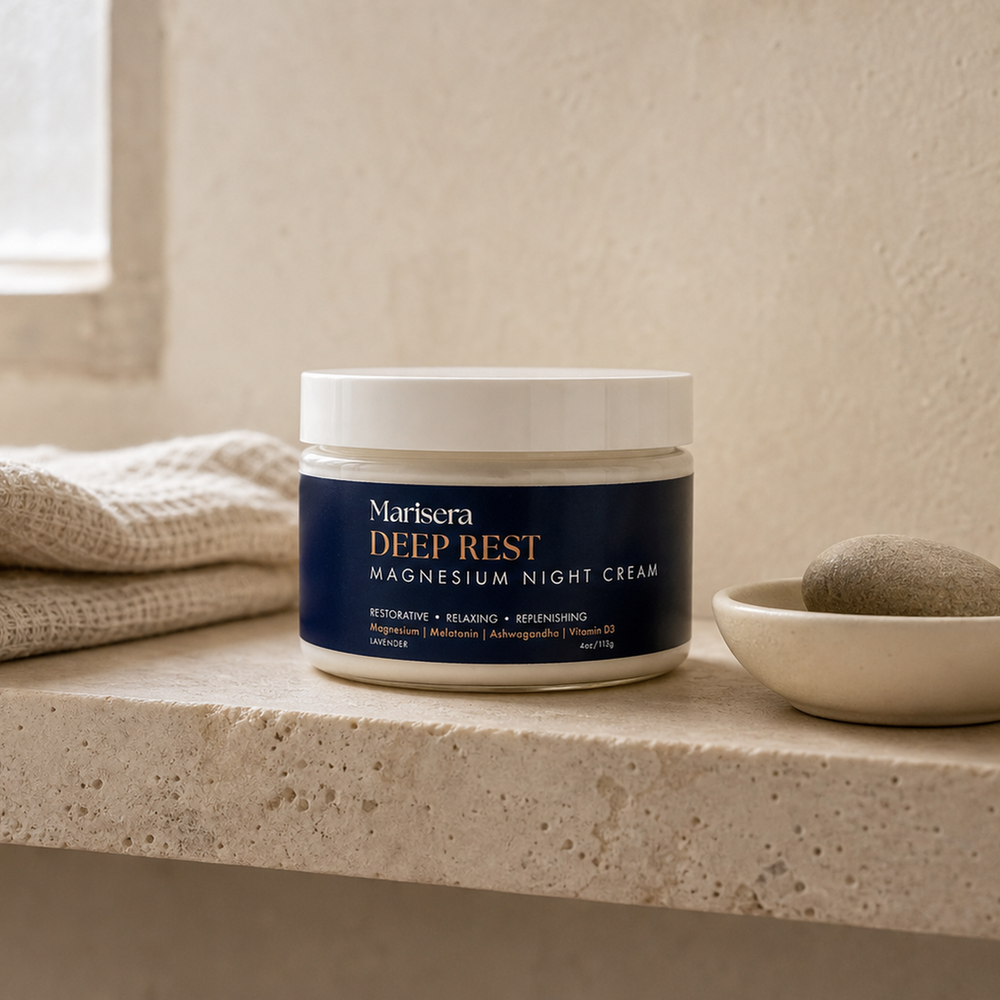
The Marisera Layered Wind-Down Ritual starts with a magnesium chloride foundation, adds its botanical formula, and puts the ingredients into a shea-and-cocoa-butter body-care base intended for massage.
For a lavender-and-melatonin evening formula, there is Deep Rest. For a fragrance-free, melatonin-free option, there is Deep Calm. Those are meaningful differences when choosing the experience; neither option needs to be presented as a stronger or guaranteed sleep treatment.
A cream gives the hands something specific to do after the preparation is complete. It is an evening body-care choice, not another instruction to perfect tomorrow.
What the research does—and what the product offers
General magnesium research and a formula description answer different questions. The former explains why the mineral is relevant. The latter explains what is in the jar and how the product is intended to be used.
Research on magnesium should not be read as a clinical trial showing that this cream corrects deficiency or improves sleep through skin absorption. That boundary leaves a straightforward reason to consider the product: a magnesium-centered massage format with clear evening formula choices.
If the bedside routine already has enough preparation, the next choice can be about a care experience rather than another rule.
A small ritual, described in human terms
Illustrative testimonials — fictional examples, not actual customer reviews.
“I have spent all day answering things. I like having a final moment that asks for no reply: a little cream, my own hands, and attention I chose for myself.”
“I chose the quieter formula because fragrance and melatonin were ingredients I wanted to leave out. Having that choice made the jar feel like mine.”
Give the finished day a deliberate care step
Explore the Night Cream page to compare Deep Rest and Deep Calm, read their ingredients and directions, and see the current options and price. Choose the formula that suits the evening care experience being sought.