
Marisera Journal · Listicle
5 questions worth asking when the same bedtime routine starts feeling different
By Marisera | October 4, 2026 | Sponsored editorial
The book beside the bed is familiar. So is the cup, the lamp and the order in which the evening gets finished.
That is what makes a changed night so frustrating. Nothing obvious in the routine has changed, yet the experience feels less predictable.
The next morning brings another round of advice: make the room dark, put the phone away, try to be consistent. Sensible suggestions, perhaps. But suggestions that can sound as though the woman hearing them has suddenly forgotten habits she has practiced for years.
Before collecting another bedtime tip, it helps to ask a different set of questions. These five are about understanding the choice ahead, without turning the whole evening into another project.
1. Am I trying to improve something I already do reasonably well?
Consistency can be useful without being the complete answer to every changed experience.
There is a difference between identifying a practical adjustment and assuming that more discipline must be the missing ingredient. The latter sends a person back through the same checklist, searching for a mistake.
Start with what is already working: a preferred room, a familiar bedtime, an evening pattern that fits actual life. Keeping useful habits makes room for a focused additional choice, rather than a wholesale reinvention of the night.
2. What job am I asking the next product to do?
“Something for sleep” can hide several different expectations.
Some people want help understanding a change. Some want a medical question answered. Others want a more deliberate care experience before bed, with ingredients and a format they have selected intentionally.
Those are different jobs. Naming the one being sought makes it easier to recognize whether a product belongs in the routine.
For evening body care, the question is concrete: would a hands-on massage ritual be a welcome addition to this particular night?
3. Why is magnesium part of the wind-down conversation?
The Stress–Magnesium Loop describes a potential connection explored in a 2020 scientific review.
The relationship offers educational context. It does not make a changed midlife night proof of a single cause.
That distinction matters because an explanation should help a buyer think more clearly, not replace one uncertainty with a sweeping answer. Magnesium can be relevant to the discussion while a product still needs to explain its composition, application and actual role.
4. Do I want every ingredient in the bedtime formula?
A lavender ritual may appeal to one person. Another may prefer an evening without added fragrance. Melatonin is also a specific ingredient choice, not something that needs to be automatically included whenever a label mentions bedtime.
These preferences deserve to be visible before a purchase. They are part of choosing the experience, not minor details discovered after opening the jar.
The same is true of the application format. A cream invites hands-on care. A supplement is a nutritional format. A bath has its own preparation and appeal. A clear choice respects those differences.
5. Can I choose one addition without replacing the whole routine?
Marisera Night Cream makes that possibility tangible through the Marisera Layered Wind-Down Ritual.
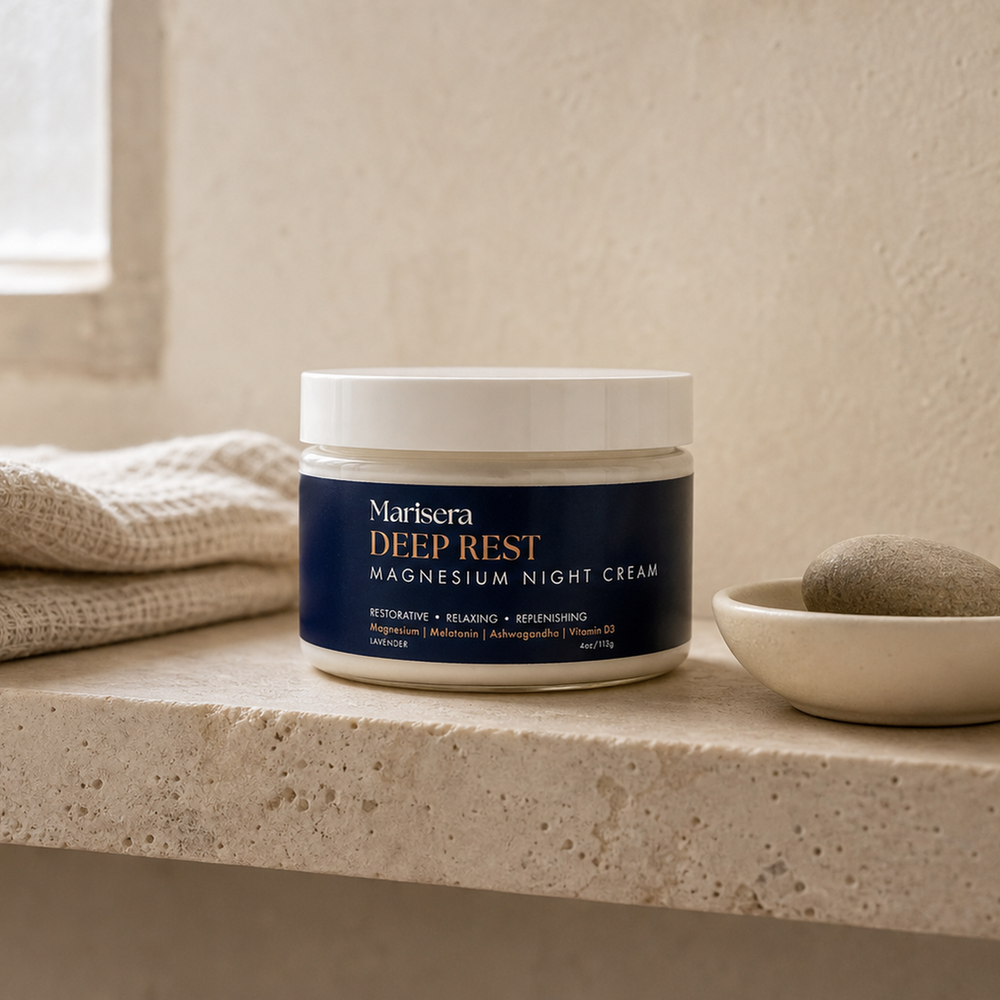
The formula begins with magnesium chloride, combines it with botanical body-care ingredients, and puts the ritual into a shea-and-cocoa-butter cream base intended for massage.
Deep Rest includes lavender and melatonin for its evening formula. Deep Calm is fragrance-free and melatonin-free. The choice lets the buyer decide what belongs in the care moment.
There is no need to make the cream responsible for every aspect of the night. Its place is specific: a deliberate body-care addition, applied with the hands, alongside the habits worth keeping.
What a thoughtful choice can sound like
Illustrative testimonials — fictional examples, not actual customer reviews.
“I have followed bedtime advice for years. I want the next choice to respect that effort and explain what it adds to the evening.”
“I chose the formula without fragrance or melatonin. I like knowing that those are choices I can make, rather than ingredients I have to accept to have a ritual.”
Those examples describe preferences, not clinical outcomes. The research explains why magnesium appears in the conversation; the product information explains the choice in the jar.
Begin with the night as it is now
A familiar routine does not have to be thrown away because the experience has changed. An additional care step can be selected on its own merits.
Explore the Night Cream options, compare the formulas and read the directions. The product page also shows the current price and purchasing choices.
The next useful question may be smaller than “How do I rebuild my night?” It may be “Which evening care experience do I actually want?”