
Marisera Journal · Listicle
5 things an after-shift care ritual should respect
By Marisera | October 4, 2026 | Sponsored editorial
The shoes come off. The chair feels welcome. Someone suggests a recovery routine.
It may be a good routine. It may also involve collecting supplies, setting something up, finding a place for it and cleaning up afterward.
After a day spent standing or moving, those details can decide whether a care idea sounds appealing or exhausting. The product's instructions are part of its value, not a small technical matter left until after purchase.
A practical after-shift choice should respect the worker's actual moment. These five criteria help evaluate focused body care when the appetite for another project is low.
The shift is finished. The next care choice should respect that.
1. The shift has already asked plenty of the body
Work does not need to look like a workout to involve physical effort.
A 2015 study examined 26 adults during five hours of simulated standing work. It is one research example of taking occupational physical load seriously; it did not test a cream.
That is the useful starting point. The person sitting down after a shift does not need their tired-feeling areas dismissed because the activity was part of a job rather than a gym session.
The care choice can acknowledge the work without romanticizing it.
2. Setup counts as effort
“Simple” is meaningful only when the real steps are visible.
A soak needs water. A device needs whatever preparation its design requires. A cream needs the hands and a reachable area for application.
None of those facts makes one format universally best. A worker who loves a soak may find it entirely worthwhile. Another may prefer a ready-to-use jar beside the chair.
The question is which experience fits the moment after this shift, not which product can make the biggest claim about convenience.
3. A hands-on format should admit that it is hands-on
Massage can be an appealing part of care. It can also feel like effort when someone wants to do as little as possible.
A cream should therefore show what it asks: a little product, a reachable area, the time taken for massage and attention to the directions afterward.
That honesty makes the comparison useful. It keeps a hands-on ritual from being sold as though it were a completely passive device.
If the worker wants that kind of touch and focus, the application itself becomes part of the reason to choose it.
4. Magnesium should be explained in the right context
The Everyday Load–Magnesium Connection links interest in everyday muscular work with magnesium-centered body care. NIH describes magnesium's role in normal muscle function.
That is educational context, not proof that a shift caused a deficiency or that a cream delivers magnesium into worked muscles.
The product needs a second explanation: its actual composition and the body-care experience that composition is intended to offer.
That is where a focused cream can earn preference instead of relying on a mineral name alone.
5. The product should have a clear reason to be the jar within reach
Marisera Deep Recovery is built around the Marisera Layered Muscle-Comfort Ritual.
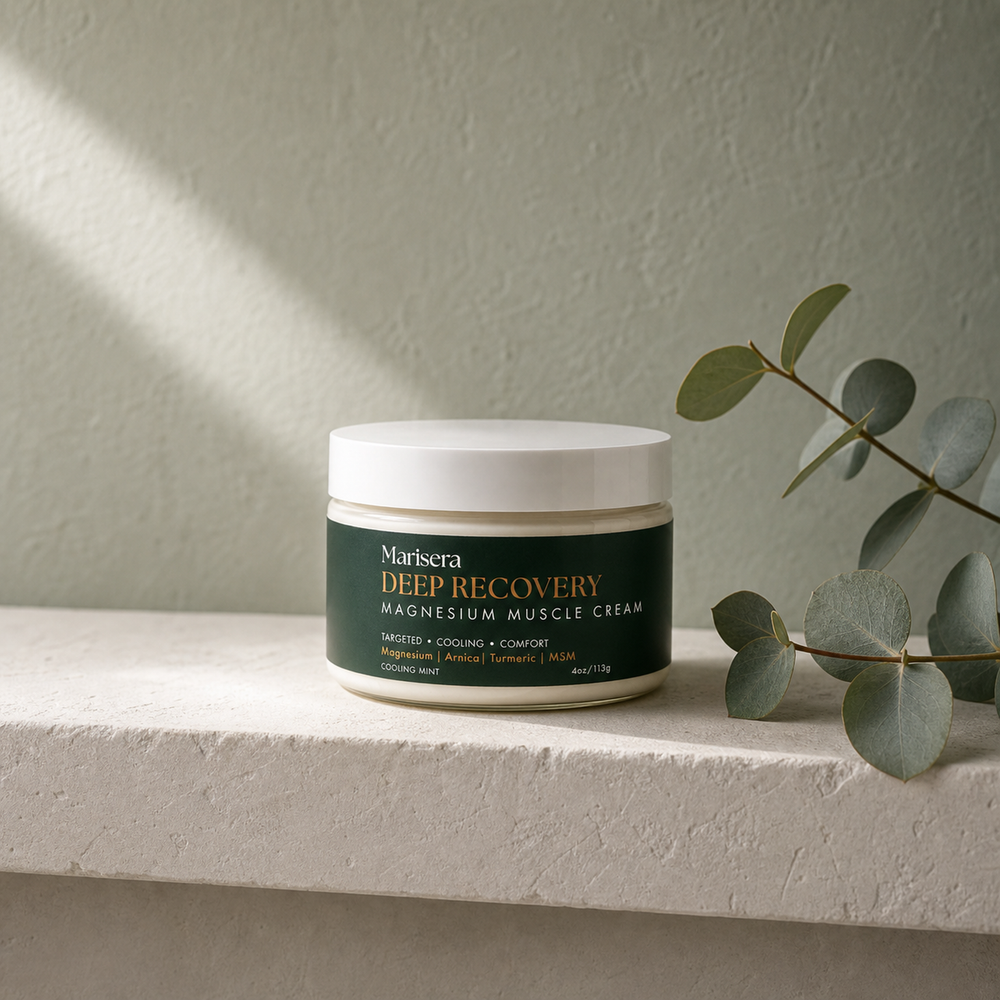
Magnesium at the Foundation comes first, through magnesium chloride. Immediate Sensory Comfort follows through a botanical sensory layer including peppermint, wintergreen, clove and helichrysum. The brand describes a cool-to-warm character.
Time-Honored Body-Care Actives—MSM, arnica and turmeric—complete the three-layer explanation. A shea-and-cocoa-butter base provides the intended massage format.
The result is a specific body-care choice for a worker who wants focused application and a distinct sensory ritual after the shift.
A worker's priorities, plainly expressed
Illustrative testimonials — fictional examples, not actual customer reviews.
“The shoes come off and I sit down first. Having a jar within reach is the part that appeals to me: choose one area and give it some attention.”
“I do not want the setup hidden from me. Show me the actual hand effort and the directions so I can decide whether I want that care after work.”
Choose for the real after-shift moment
That moment may happen in the evening or in the morning after night work. Body care can be organized around the shift finishing, rather than an assumed bedtime.
Deep Recovery is a separate care choice alongside practical needs such as footwear, movement opportunities and appropriate attention to persistent symptoms. It is not a promise to treat occupational pain or replace changes at work.
For the worker who wants a magnesium-centered massage cream, inspect the ingredients and directions, then see the current purchasing options.
The shoes can be off. The product's job is to offer a care experience worth choosing in the moment that follows.